Native mode-switching probe: base BAGEL vs ThinkMorph

Identical released samples and inference settings. Neither model was forced to draw: an image appears only if its own text decoder emitted <image_start>. Two samples per task; the tiny accuracies below are descriptive, not benchmark estimates.

TaskModelNExact parsed answer
Chart_RefocusBAGEL-7B-MoT2100.0%
Jigsaw_AssemblyBAGEL-7B-MoT250.0%
Spatial_NavigationBAGEL-7B-MoT20.0%
Visual_SearchBAGEL-7B-MoT2100.0%
Chart_RefocusThinkMorph-7B2100.0%
Jigsaw_AssemblyThinkMorph-7B2100.0%
Spatial_NavigationThinkMorph-7B2100.0%
Visual_SearchThinkMorph-7B2100.0%

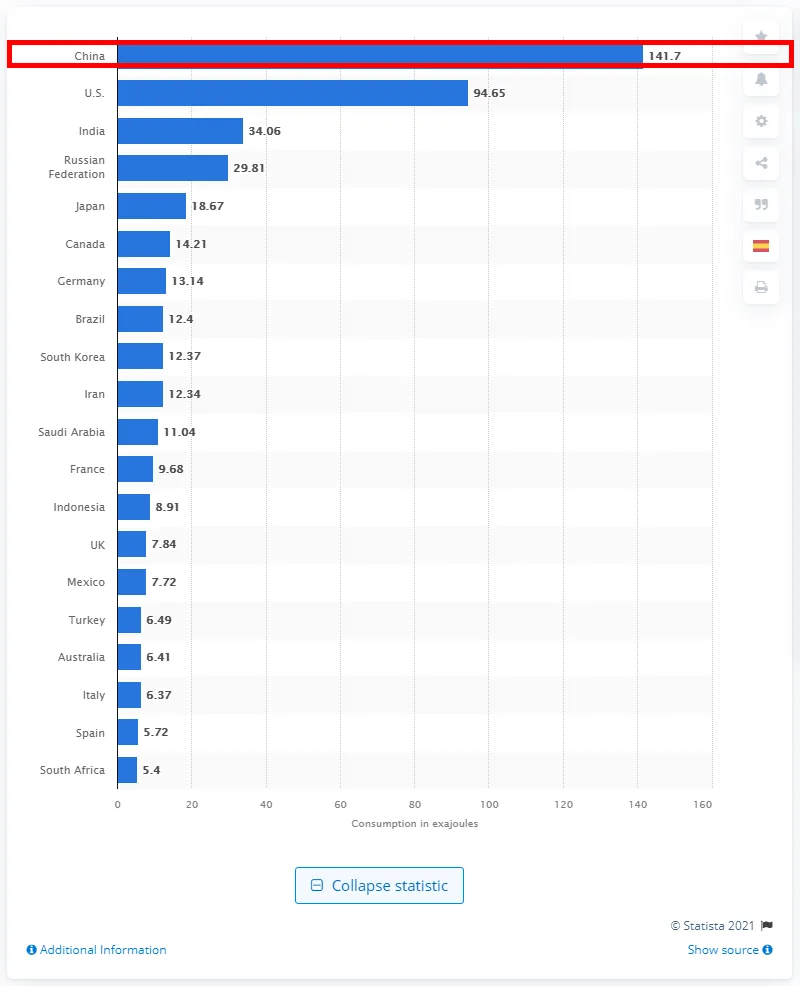
Chart Refocus: 00001

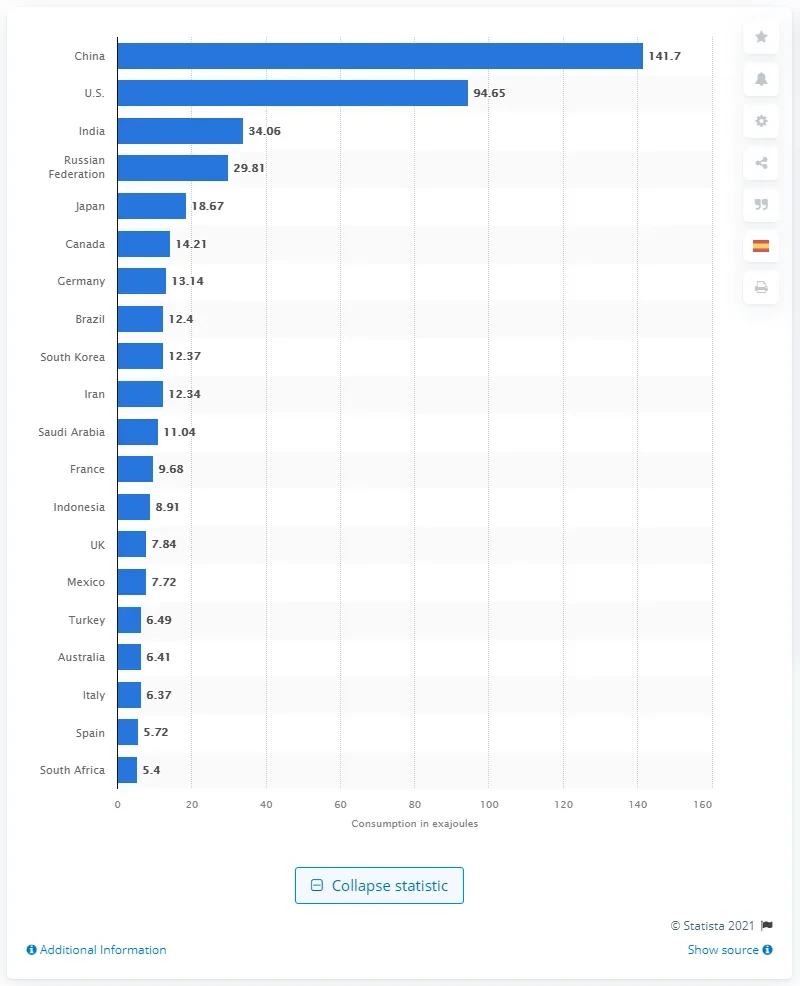
Ground truth: 141.7
Input
Released supervised target thought
Exact prompt
How many exajoules did China use in 2019?

BAGEL-7B-MoT correct

Parsed: 141.7 · Runtime: 20.6s · Images: 0

No image emitted naturally.

Complete raw output
<think>
To determine the number of exajoules China used in 2019, I start by examining the provided bar chart. The chart lists various countries along with their energy consumption in exajoules. Each bar represents a country, and the length of the bar corresponds to the energy consumption value.

From the image, I identify China as the first entry on the list. The bar for China is the longest, indicating the highest energy consumption among the listed countries. The value next to China's bar is 141.7 exajoules. This value is clearly labeled and corresponds to the energy consumption of China in 2019.

To ensure accuracy, I cross-check the chart to confirm that no other country has a higher value. The second-highest is the U.S. with 94.65 exajoules, which is significantly lower than China's figure. This confirms that China's energy consumption in 2019 was indeed 141.7 exajoules.
</think>
China used **141.7 exajoules** of energy in 2019, as shown in the bar chart. This value is the highest among the listed countries, indicating its significant energy consumption relative to others like the U.S. and India.

ThinkMorph-7B correct

Parsed: 141.7 · Runtime: 98.1s · Images: 1
Generated thought
Complete raw output
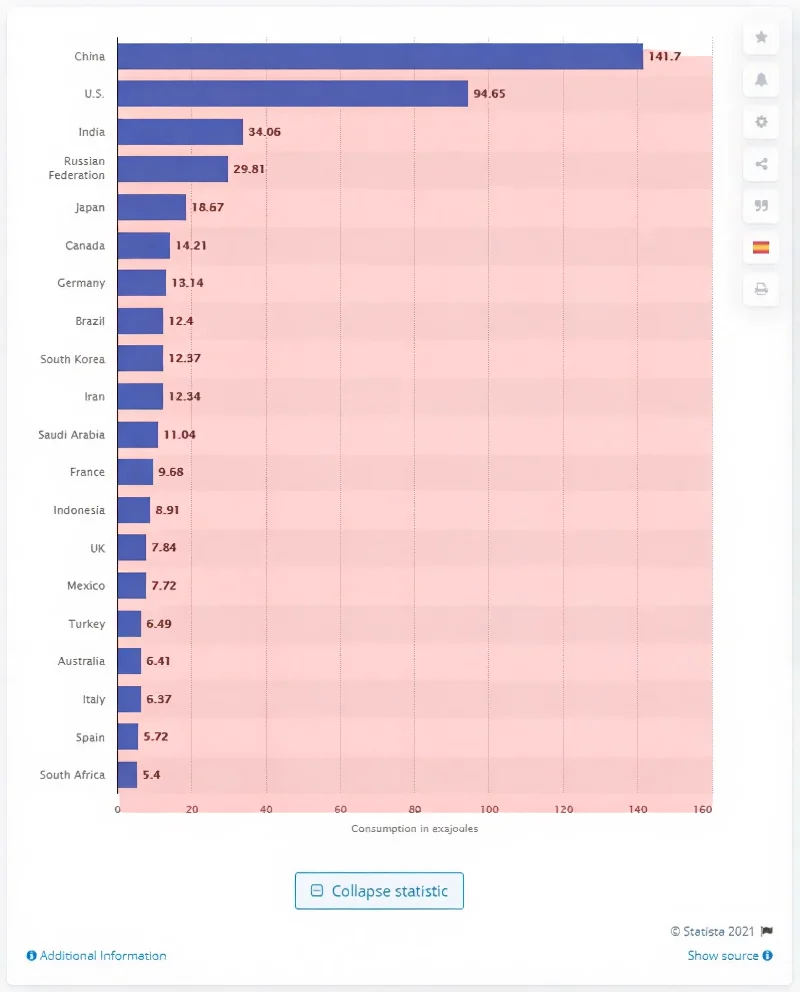
<think>To answer the question about how many exajoules of energy China used in 2019, I need to look for the data specifically associated with China in the chart. The visualization is a horizontal bar chart ranking countries by energy consumption in exajoules, with each country listed on the left and their corresponding consumption value shown at the end of the bar. Since the query focuses on China, I should locate the bar labeled 'China'—which is the first (topmost) entry in the chart. The number next to this bar represents the value of interest. To make this information stand out and directly address the query, it is logical to highlight the entire horizontal area corresponding to China, including both the label and the value. This ensures that the relevant information (China's energy consumption in exajoules) is clearly emphasized for reference.</think><image_start>

[generated image: generated-thought-0.webp]

<image_end><think>To determine how many exajoules of energy China used in 2019, I first locate China on the vertical axis of the bar chart. The horizontal bar corresponding to China is the topmost entry, and it is visually highlighted, drawing attention to both the label 'China' and its associated value. Next, I look at the number at the end of the highlighted bar, which represents China's energy consumption for the year in question. The value displayed is 141.7, and the unit (exajoules) is clearly indicated in the chart's axis label. By focusing on the highlighted section, I can confidently conclude that China used 141.7 exajoules of energy in 2019.</think><answer>141.7</answer>
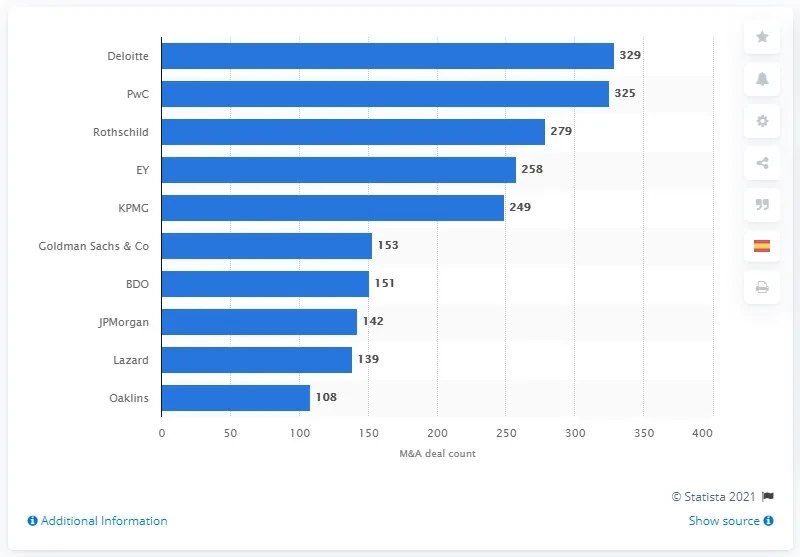
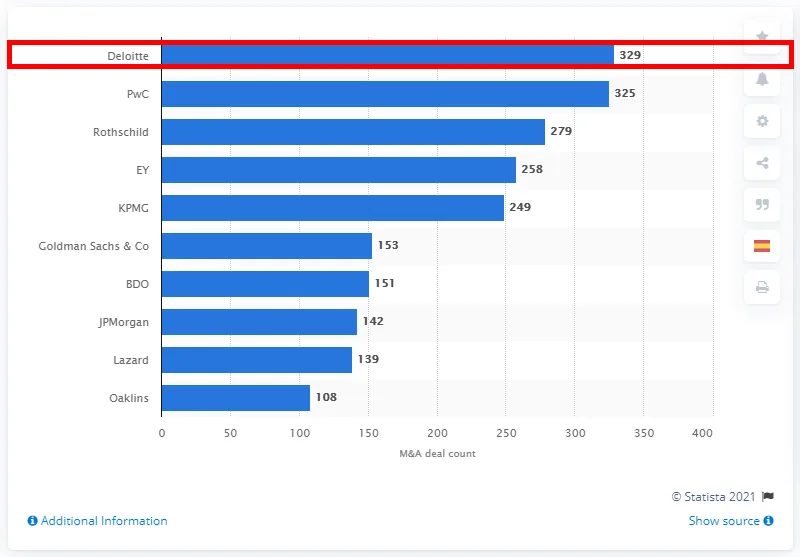
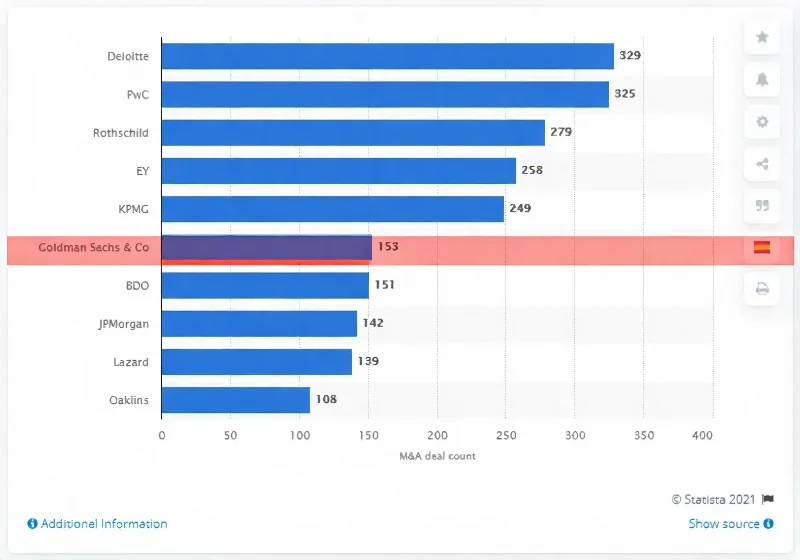
Chart Refocus: 00048

Ground truth: 329

Input
Released supervised target thought
Exact prompt
How many deals did Deloitte have in 2018?

BAGEL-7B-MoT correct

Parsed: 329 · Runtime: 10.1s · Images: 0

No image emitted naturally.

Complete raw output
<think>
To determine the number of deals Deloitte had in 2018, I start by examining the provided bar chart. The chart lists various financial institutions along with their respective M&A deal counts. Deloitte is one of the listed entities, and its bar is clearly marked with the number 329. This indicates the total number of deals Deloitte conducted in 2018. The chart's source, Statista 2021, suggests the data is reliable and up-to-date. No additional calculations or assumptions are needed, as the chart directly provides the required information.
</think>
The answer is 329.

ThinkMorph-7B correct

Parsed: 329 · Runtime: 59.8s · Images: 1

Generated thought
Complete raw output
<think>To answer the question about the number of deals Deloitte had in 2018, I need to locate Deloitte in the chart. The visualization is a horizontal bar chart listing various financial institutions on the y-axis, with their respective M&A deal counts on the x-axis. Since the query asks specifically about Deloitte, my focus should be on the row labeled 'Deloitte.' The corresponding bar represents the number of deals, and the value is shown at the end of the bar. To make this information stand out and directly address the query, highlighting the entire Deloitte row—including the label and the bar—will draw attention to the relevant data. This approach ensures that the viewer can immediately identify Deloitte's deal count as the answer to the query.</think><image_start>

[generated image: generated-thought-0.webp]

<image_end><think>To determine how many deals Deloitte had in 2018, I first locate Deloitte on the vertical axis of the horizontal bar chart. The Deloitte row is highlighted, making it easy to identify. I then look across to the end of the highlighted bar to find the precise number displayed, which is '329.' This value represents Deloitte's M&A deal count for 2018. By focusing on the highlighted row and reading the number at the end of the corresponding bar, I can confidently conclude that Deloitte had 329 deals in 2018.</think><answer>329</answer>

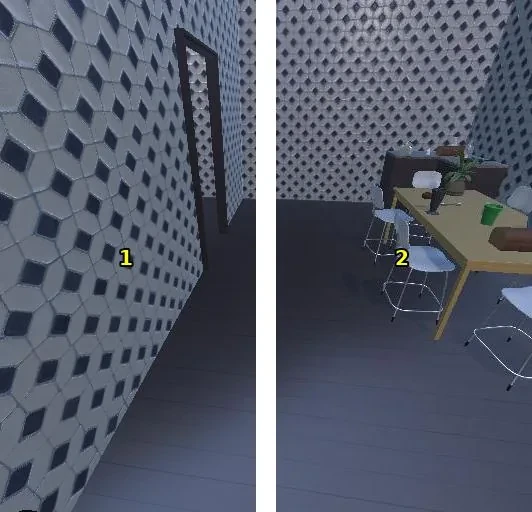
Jigsaw Assembly: 00001

Ground truth: A

Input
Released supervised target thought
Exact prompt
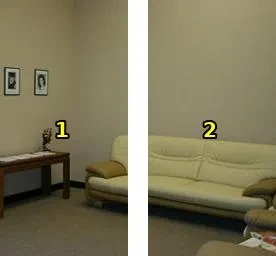
The image below is divided vertically into two parts by a white strip, forming a 1×2 jigsaw puzzle. The left part is labeled "1" and the right part is labeled "2". These two parts are shuffled and may not be in their original order. Your task is to determine the correct arrangement of the two parts to reconstruct a natural-looking image.

Select the correct answer from the following 2 choices:

(A) Part 1 should be to the left of Part 2
(B) Part 1 should be to the right of Part 2

BAGEL-7B-MoT correct

Parsed: A · Runtime: 20.9s · Images: 0

No image emitted naturally.

Complete raw output
<think>
Okay, let's see. The question is about rearranging two parts of a jigsaw puzzle to form a natural-looking image. The original image is split vertically into two parts by a white strip. The left part is labeled 1, and the right part is labeled 2. The task is to determine whether part 1 should be to the left of part 2 or to the right.

First, I need to visualize how the two parts fit together. The left part (1) shows a corridor with a door at the end, and the right part (2) shows a room with a table, chairs, and some objects. The key here is to figure out the correct orientation so that the two parts connect seamlessly.

Looking at the corridor in part 1, the door is on the right side of the frame. The right part (2) shows a room that seems to be connected to the corridor. The door in part 1 likely leads into the room in part 2. So, if part 1 is on the left, then part 2 should be on the right to form a continuous scene. That makes sense because the door in part 1 would open into the room in part 2.

Alternatively, if part 1 were on the right and part 2 on the left, the door in part 1 would be facing the wrong direction. The corridor in part 1 ends with a door, so the next part should logically be the room that the door leads to. Therefore, part 1 should be on the left, and part 2 on the right. That would create a natural flow from the corridor to the room.

So, the correct answer should be option A: Part 1 should be to the left of Part 2.
</think>

The answer is (A)

ThinkMorph-7B correct

Parsed: A · Runtime: 61.9s · Images: 1

Generated thought
Complete raw output
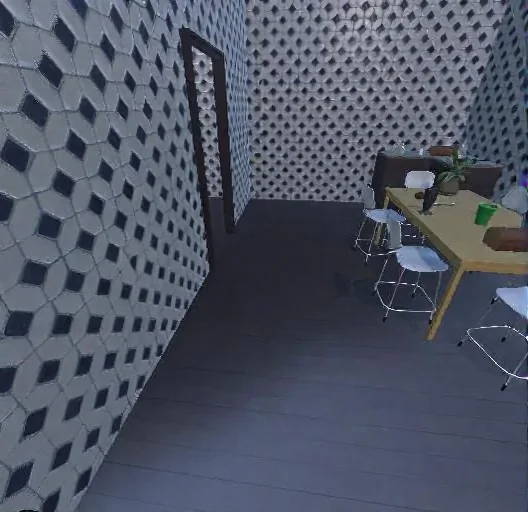
<think>To solve this 1×2 jigsaw puzzle, I begin by carefully examining the visual content of each piece. Piece 1 (labeled '1') shows the left side of a room with a geometric patterned wall, a doorway, and a hallway extending into the distance. The floor is visible in the foreground, and the wall pattern is prominent on the left wall. There is no furniture visible in this piece, only the passage leading deeper into the room. 

Piece 2 (labeled '2') depicts the right side of the same room. Here, the geometric wall pattern continues, but now there is a table with chairs, a green plant, and several objects on the table. The floor and the back wall are visible, and the perspective suggests that the room extends from left to right. 

Next, I look for visual cues that indicate how the two pieces should fit together. The most important clue is the continuity of the wall pattern and the floor. In Piece 1, the wall with the geometric pattern runs along the left side and extends toward the back, while in Piece 2, the same pattern continues along the back wall. The hallway visible through the doorway in Piece 1 should logically lead into the open space seen in Piece 2. Additionally, the floorboards and lighting are consistent between the two pieces, suggesting they are part of the same room and should be adjacent. 

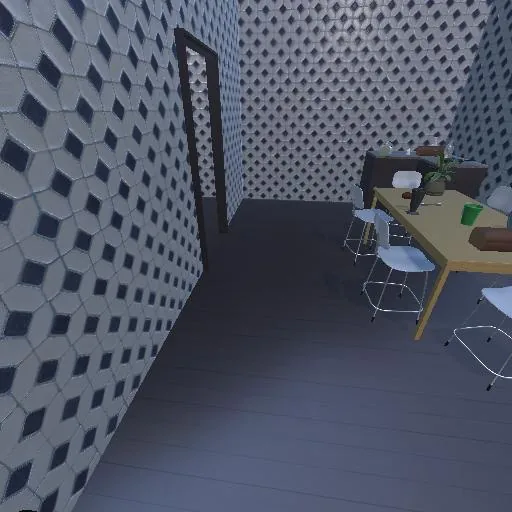
If I place Piece 1 on the left and Piece 2 on the right (Choice A), the geometric pattern on the left wall and the doorway will flow naturally into the open room with the table, creating a coherent and realistic scene. Placing Piece 1 to the right of Piece 2 (Choice B) would break the continuity of the wall pattern and misalign the hallway and open space, making the room look unnatural and the perspective inconsistent.</think><image_start>

[generated image: generated-thought-0.webp]

<image_end><think>After assembling the two parts according to my previous reasoning, I closely examine the resulting image for visual coherence and naturalness. The geometric wallpaper pattern flows seamlessly from the left wall and continues onto the back wall, maintaining consistent perspective and alignment. The doorway on the left leads into the hallway, which naturally connects with the open space containing the table and chairs on the right. The floorboards are unbroken and maintain a consistent color and direction throughout the scene, further supporting the sense of spatial continuity. The lighting is uniform, and there are no abrupt breaks or mismatches at the boundary where the two pieces meet. The arrangement of objects, such as the table and chairs, is logical for a room layout and aligns with the hallway's perspective, making the entire environment believable. Comparing this assembled result to the original pieces, all visual elements now align correctly: the left side offers a passage and wall detail, while the right side reveals the room's furnishings, and both are integrated smoothly. This confirms that the arrangement is visually sound and reconstructs a coherent image. The answer is: (A) Part 1 should be to the left of Part 2.</think><answer>A</answer>

Jigsaw Assembly: 00048

Ground truth: A

Input
Released supervised target thought
Exact prompt
The image below is divided vertically into two parts by a white strip, forming a 1×2 jigsaw puzzle. The left part is labeled "1" and the right part is labeled "2". These two parts are shuffled and may not be in their original order. Your task is to determine the correct arrangement of the two parts to reconstruct a natural-looking image.

Select the correct answer from the following 2 choices:

(A) Part 2 should be to the right of Part 1
(B) Part 2 should be to the left of Part 1

BAGEL-7B-MoT wrong

Parsed: B · Runtime: 54.1s · Images: 0

No image emitted naturally.

Complete raw output
<think>


Okay, let's see. The question is about rearranging two parts of a jigsaw puzzle to form a natural-looking image. The original image is split vertically into two parts by a white strip, labeled 1 and 2. The task is to determine whether part 2 should be to the right of part 1 (option A) or to the left (option B).

First, I need to visualize the original image. From the question, part 1 is on the left and part 2 is on the right. The left part (1) shows a corner of a room with a table, some framed pictures on the wall, and a small decorative item. The right part (2) shows a beige couch with pillows. The white strip in the middle is the divider between the two parts.

Now, the challenge is to figure out the correct order when the parts are shuffled. The options are either part 2 to the right of part 1 (A) or part 2 to the left of part 1 (B). Let's think about how the original image might look when reconstructed.

If part 1 is on the left and part 2 on the right, the original image would have the couch on the right side and the table with pictures on the left. But when shuffled, the parts might be reversed. So, if part 2 is supposed to be on the left, then the reconstructed image would have the couch on the left and the table on the right. But that doesn't make sense because the couch is a large piece of furniture, and the table is smaller. Alternatively, maybe the original image had the couch on the right side, and part 2 is the right part, so part 1 is the left part. If we reverse them, part 2 would be on the left, and part 1 on the right. But the question is asking which arrangement (A or B) is correct.

Wait, the original image is split into two parts by a white strip. So part 1 is the left half, part 2 is the right half. If the parts are shuffled, the correct arrangement would be part 1 on the left and part 2 on the right, which is the original. But the options are whether part 2 is to the right of part 1 (A) or to the left (B). So if part 2 is to the left of part 1, that would mean the image is split the other way. But the original split is part 1 on the left and part 2 on the right. So the correct answer would be that part 2 is to the right of part 1, which is option A. But wait, the question says the two parts are shuffled and may not be in their original order. So the correct answer is either A or B. But how do I know which one is correct?

Alternatively, maybe the original image is part 1 on the left and part 2 on the right. If the parts are shuffled, the correct arrangement would be part 1 on the left and part 2 on the right, which is option A. But the question is phrased as "the correct arrangement of the two parts to reconstruct a natural-looking image." So if part 1 is the left part and part 2 is the right part, then the correct answer is A. But the options are (A) part 2 to the right of part 1, which would mean part 1 is on the left and part 2 on the right. But that's the original arrangement. However, the question says the parts are shuffled. So perhaps the original image is part 1 on the left and part 2 on the right, but when shuffled, part 2 is on the left and part 1 on the right. Then the correct arrangement would be part 2 to the left of part 1 (option B). But how do I know which is correct?

Wait, looking at the image again. Part 1 shows a corner with a table, some pictures, and part 2 shows a couch. If the original image is part 1 on the left and part 2 on the right, then the correct arrangement is part 1 on the left and part 2 on the right. But the options are (A) part 2 to the right of part 1, which would be the original. But the question says the parts are shuffled. So perhaps the correct answer is that part 2 is to the left of part 1 (option B). But how can I confirm?

Alternatively, maybe the original image is part 2 on the left and part 1 on the right. Then the correct arrangement would be part 2 to the left of part 1 (option B). But the question is asking which is the correct arrangement when the parts are shuffled. The answer would depend on the original split. The original split is part 1 on the left and part 2 on the right

ThinkMorph-7B correct

Parsed: A · Runtime: 63.2s · Images: 1

Generated thought
Complete raw output
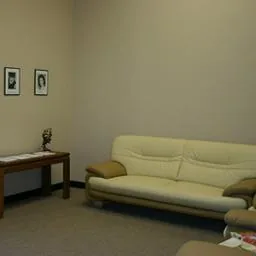
<think>To solve this puzzle, I begin by closely examining the visual content of each piece. Piece 1 (left) shows a portion of a room with a beige wall, two framed black-and-white photographs, and a wooden table with some items on top. To the right edge of this piece, there is the left armrest and a bit of the seat of a light-colored sofa, which appears to continue out of frame. Piece 2 (right) features the continuation of the same beige wall and the rest of the light-colored sofa, including its right armrest and seat. There is also a small part of another object (possibly a table or magazine) in the bottom right corner, but the main focus is on the sofa. 

The key to assembling these pieces lies in the continuity of the sofa. The left piece ends with the left side of the sofa, while the right piece starts with the right side of the same sofa, suggesting that they belong next to each other. Additionally, the table and framed photos are positioned to the left of the sofa, which is a typical layout in living rooms, with furniture arranged around the seating area. The lighting, wall color, and perspective lines are consistent across both pieces, further supporting that they are adjacent parts of the same scene.

If I arrange Part 1 on the left and Part 2 on the right (choice A), the sofa will be correctly reconstructed from left to right, the wall and floor lines will align, and the overall image will look natural. Placing Part 2 to the left of Part 1 (choice B) would result in the sofa being visually disjointed, with the left armrest appearing after the right, breaking the continuity and making the room layout look unnatural.</think><image_start>

[generated image: generated-thought-0.webp]

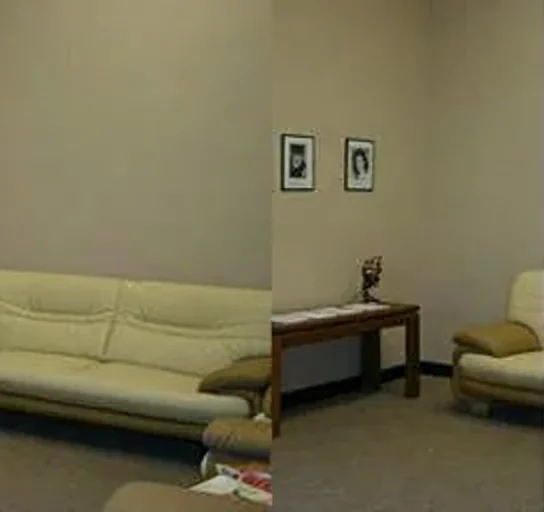
<image_end><think>Now that I have assembled the two parts in the order previously determined—Part 1 on the left and Part 2 on the right—I will carefully examine the resulting image for coherence and naturalness. First, I observe the sofa: the left side of the sofa begins seamlessly at the left edge of the image, and its right armrest continues naturally into the right side, with no visible discontinuity or misalignment. The tufting on the sofa's backrest and the shadowing along the base are consistent across the join, indicating proper alignment of the two halves. 

Next, I look at the table and wall decor. The wooden table is positioned correctly to the right of the sofa, with the two framed photographs above it, which is visually logical for a living room arrangement. The wall color and lighting remain uniform throughout, with no abrupt changes or mismatched tones at the boundary. The floor lines and perspective also carry through without interruption. 

There are no jarring breaks or duplicated elements at the seam, and the spatial relationships between all the objects are preserved, reinforcing the natural look of the reconstructed scene. Comparing back to the original pieces, every major object and surface boundary now connects as expected, with perfect visual continuity.

Thus, the answer is: (A) Part 2 should be to the right of Part 1.</think><answer>A</answer>

Spatial Navigation: frozenlake_s3_1481_cot

Ground truth: D,R

Input
Released supervised target thought
Exact prompt
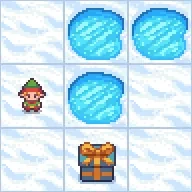
You are a maze solver. Your goal is to guide a player from the start to the goal on a grid map while avoiding holes. The player can move one square at a time in the directions left (L), right (R), up (U), or down (D). The frozen lake is not slippery; the player will always move in the intended direction. Moving off the edge or falling into a hole results in failure. Reaching the goal means success.

Provide your solution as a sequence of moves wrapped in \boxed{{}}, such as \boxed{L,R,U,D}. The moves should be comma-separated.

BAGEL-7B-MoT wrong

Parsed: None · Runtime: 53.8s · Images: 0

No image emitted naturally.

Complete raw output
<think>
Okay, let's see. I need to find a path from the start to the goal on this grid, avoiding the holes. The start is the elf character, and the goal is the gift box. The frozen lake squares are safe, but the empty squares are holes, right? So the player can't step on them. 

First, I should look at the grid. The elf is in the middle left. The goal is at the bottom right. The holes are the empty squares. Let me visualize the grid again. The top row has three frozen squares, then the middle row has two frozen squares and an empty square. The bottom row has the goal and an empty square. Wait, the empty squares are the ones that are holes. So the player can't go through them. 

So the player starts at the elf's position. Let me note the positions. Let's say the grid is 3x3. The elf is at (0,1), assuming rows are vertical and columns horizontal. The goal is at (2,2). The holes are the empty squares. Let me check each cell:

Row 0: all three cells are frozen (blue), so safe.
Row 1: first cell is empty (hole), second is frozen, third is empty (hole).
Row 2: first cell is empty (hole), second is the goal, third is empty (hole).

Wait, no. Wait, the question says the frozen lake is not slippery, but the empty squares are holes. So the player can't step on empty squares. So the player can only move on the frozen squares. So the grid is 3x3. Let me list the positions:

Positions (row, column):
(0,0) frozen
(0,1) frozen
(0,2) frozen
(1,0) empty (hole)
(1,1) frozen
(1,2) empty (hole)
(2,0) empty (hole)
(2,1) goal
(2,2) empty (hole)

So the player starts at (1,0) (assuming the elf is in the middle left, which is row 1, column 0). Wait, no. Wait, the question's image shows the elf in the middle left. Let me check the question again. The question's image shows the elf in the middle left cell of the grid. So the grid is 3x3. The elf is at (1,0) if rows are vertical and columns horizontal. Wait, maybe the grid is arranged as 3 rows and 3 columns. Let me confirm:

Looking at the question's image: the elf is in the middle left cell. The grid is 3x3. So positions are:

Row 0: [Frozen, Frozen, Frozen]
Row 1: [Empty, Frozen, Empty]
Row 2: [Empty, Goal, Empty]

So the start is at (1,0) (row 1, column 0). The goal is at (2,1). The empty cells are the holes. So the player can only move on the frozen squares. So the player can move up, down, left, right, but can't step into empty cells.

So the path needs to go from (1,0) to (2,1), avoiding the empty cells. Let's see possible moves.

Starting at (1,0). From here, possible moves are up (to (0,0)), right (to (1,1)), or down (but row 1 is the middle row, so down would be row 2, column 0, which is empty, so that's a hole. So can't go down. So possible moves are up to (0,0) or right to (1,1).

Let's try moving up first. From (1,0) to (0,0). Then from (0,0), possible moves: right to (0,1), down to (1,0) (but that's back), or left (but column 0 is the leftmost, so can't go left). So from (0,0), move right to (0,1). Then from (0,1), possible moves: left (back to 0,0), right to (0,2), down to (1,1). Let's go right to (0,2). Then from (0,2), can move down to (1,2) but that's a hole. So can't. So from (0,2), can only move left to (0,1) or down to (1,2) (hole). So maybe that's a dead end. Alternatively, from (0,1), move down to (1,1). Then from (1,1), possible moves: up to (0,1), down to (2,1) which is the goal. So that's a possible path

ThinkMorph-7B correct

Parsed: D,R · Runtime: 42.3s · Images: 1

Generated thought
Complete raw output
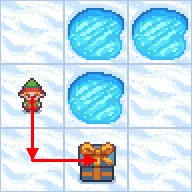
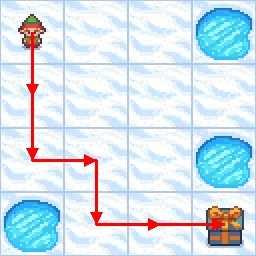
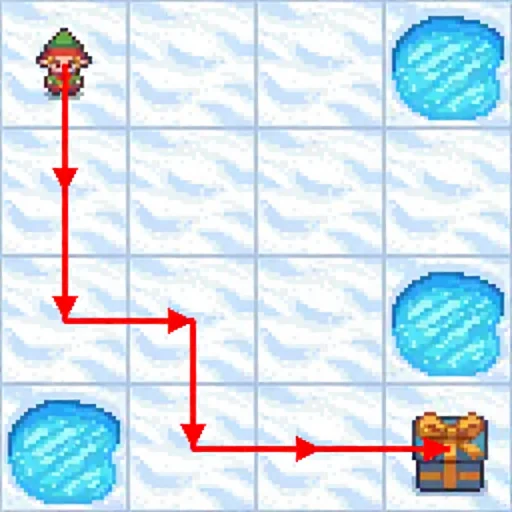
<think>First, I'll lay out the structure of the maze. This is a 3x3 grid. The starting position is in the middle cell of the left column (that's row 2, column 1). The goal is located at the bottom row, center column (row 3, column 2). There are ice holes in the top row: one at the middle cell (row 1, column 2) and another at the rightmost cell (row 1, column 3). The rest of the cells are safe frozen surfaces.

With the layout clear, it's time to plot the path from the starting point to the goal.</think><image_start>

[generated image: generated-thought-0.webp]

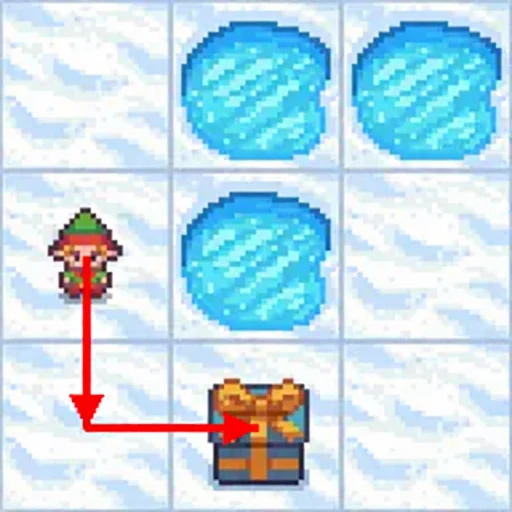
<image_end><think>Now, I'll double-check the path I plotted. The red arrows start at the middle-left cell (the starting position), move down to the bottom-left cell, and then right to the bottom-center cell. This final cell contains the goal.

There are no holes in either of these moves: the first move goes straight down a safe frozen surface, and the second move goes right also onto a safe square. The path avoids all dangerous holes and successfully reaches the goal.

Therefore, my solution path is correct. The sequence of moves is:

\boxed{D,R}</think><answer>\boxed{D,R}</answer>

Spatial Navigation: frozenlake_s4_482_cot

Ground truth: D,D,R,D,R,R

Input
Released supervised target thought
Exact prompt
You are a maze solver. Your goal is to guide a player from the start to the goal on a grid map while avoiding holes. The player can move one square at a time in the directions left (L), right (R), up (U), or down (D). The frozen lake is not slippery; the player will always move in the intended direction. Moving off the edge or falling into a hole results in failure. Reaching the goal means success.

Provide your solution as a sequence of moves wrapped in \boxed{{}}, such as \boxed{L,R,U,D}. The moves should be comma-separated.

BAGEL-7B-MoT wrong

Parsed: R,R,D,D,R,D · Runtime: 49.0s · Images: 0

No image emitted naturally.

Complete raw output
<think>
Okay, let's see. I need to find a path from the start to the goal on this grid. The start is the character in the top-left corner, and the goal is the gift box in the bottom-right. The frozen lakes are safe, but I have to avoid the holes. The player can move in four directions: left, right, up, down. Each move is one square.

First, I should visualize the grid. The grid is 4x4. The start is at (0,0). The goal is at (3,3). The frozen lakes are in positions (0,3), (2,3), and (3,2). The holes are the empty squares except for the start and goal. Wait, no, the image shows that the frozen lakes are the blue circles, and the rest are snow. So the player can move through the snow, but the holes are the empty squares. Wait, the question says the frozen lake is not slippery, so the player moves in the intended direction. So the player can move through the snow squares, but if they step into a hole, they fail. So the holes are the empty squares except for the start and goal. Wait, the image shows that the start is a character, the goal is a gift box, and the frozen lakes are blue. The rest are snow. So the player can move through the snow squares, but the holes are the empty squares. Wait, but the image shows that the frozen lakes are in some positions, and the rest are snow. So the player can move through the snow, but the holes are the empty squares. So the player can't step into the empty squares. So the path must go through the snow squares, avoiding the holes (empty squares) and the frozen lakes (blue squares) are safe. Wait, but the frozen lakes are part of the grid. Wait, the question says the frozen lake is not slippery, so the player moves in the intended direction. So the frozen lakes are considered safe. So the player can move into the frozen lakes. The holes are the empty squares. So the player must navigate from start to goal without stepping into any empty squares. So the path must go through the snow squares and the frozen lakes.

Looking at the grid:

Row 0: [Start, snow, snow, frozen lake]
Row 1: [snow, snow, snow, snow]
Row 2: [snow, snow, snow, frozen lake]
Row 3: [snow, snow, snow, goal]

So the start is (0,0). The goal is (3,3). The frozen lakes are at (0,3), (2,3), and (3,2). The empty squares are the rest. So the player can't step into the empty squares. So the path must go through the snow and frozen lake squares.

So the player needs to move from (0,0) to (3,3), moving only through snow and frozen lake squares, avoiding the empty squares.

Possible path: Let's think. The start is at (0,0). The first move could be right to (0,1). Then right again to (0,2). Then down to (1,2). Then down to (2,2). Then right to (2,3) (frozen lake, safe). Then down to (3,3) (goal). Wait, but (2,3) is a frozen lake, which is safe. So that path would be: R, R, D, D, R, D. Let's check each step:

Start at (0,0). Move R to (0,1). Then R to (0,2). Then D to (1,2). Then D to (2,2). Then R to (2,3) (frozen lake). Then D to (3,3) (goal). That seems to work. Let's check if any steps go into empty squares. No, all moves are on snow or frozen lake. So that's a valid path. The moves would be R, R, D, D, R, D. So the sequence is RRD, D, R, D. Wait, but the order is R, R, D, D, R, D. So the moves are R, R, D, D, R, D. So the answer would be \boxed{R,R,D,D,R,D}.
</think>

\boxed{R,R,D,D,R,D}

ThinkMorph-7B correct

Parsed: D,D,R,D,R,R · Runtime: 49.2s · Images: 1

Generated thought
Complete raw output
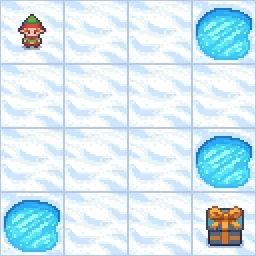
<think>To get oriented, I'll lay out the key features of the maze. The grid is 4 rows by 4 columns. The player starts in the top-left corner, which is position (row 1, column 1). The goal, marked by a present, is located in the bottom-right corner at (row 4, column 4).

There are three hazardous ice holes to avoid:
- One is in the top row, at the far right (row 1, column 4).
- Another is in the third row, also at the far right (row 3, column 4).
- The last is in the bottom row, at the far left (row 4, column 1).

All other squares are safe frozen surfaces.

With the start, goal, and ice holes clearly identified, it's time to plot out the safest route through the maze.</think><image_start>

[generated image: generated-thought-0.webp]

<image_end><think>For final verification, I’ll retrace my solution step-by-step to ensure it safely leads from the starting square to the goal without stepping into any holes.

Starting at the top-left corner (row 1, column 1), the path goes:
- Down to (row 2, column 1)
- Down to (row 3, column 1)
- Right to (row 3, column 2)
- Down to (row 4, column 2)
- Right to (row 4, column 3)
- Right to (row 4, column 4), which is the goal

At each step, I avoid all ice holes: I never step into the holes at the far right of the top row, the third row, or the far left of the bottom row. Every move lands on a safe frozen surface until reaching the goal.

This confirms that my solution is correct. The verified path is:
\boxed{D,D,R,D,R,R}</think><answer>\boxed{D,D,R,D,R,R}</answer>

Visual Search: 00001

Ground truth: hot dog

Input
Released supervised target thought
Exact prompt
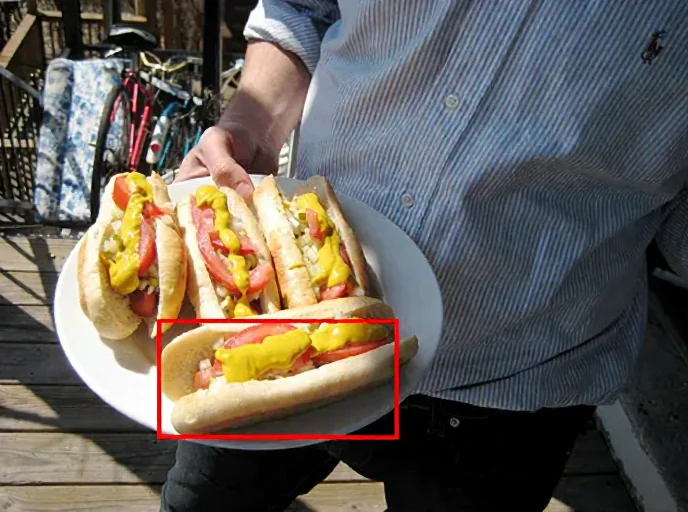
Which kind of fast food is on the plate?

BAGEL-7B-MoT correct

Parsed: hot dog · Runtime: 17.7s · Images: 0

No image emitted naturally.

Complete raw output
<think>
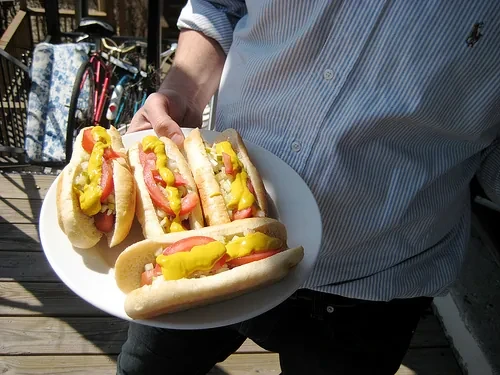
To determine the type of fast food on the plate, I first examine the question_image, which shows a plate containing four hot dogs. Each hot dog is topped with mustard, ketchup, and possibly relish or onions, and they are served in buns. The question_text asks specifically about the type of fast food, so I focus on identifying the primary item on the plate.

Hot dogs are a classic example of fast food, often associated with casual dining or street food. They are typically served in buns and can be customized with various toppings, which aligns with the toppings visible in the image. The context of the image, showing a person holding the plate outdoors, further supports the idea that this is a casual, fast-food setting.

When forming the answer_text, I would confirm that the plate contains hot dogs. For the answer_image, I would ensure it visually represents a similar plate of hot dogs, possibly with different toppings or a different presentation to emphasize the variety or context of the food. This approach ensures clarity and relevance to the question.
</think>
The plate contains **hot dogs**. These are classic fast food items typically served in buns and customized with toppings like mustard, ketchup, and relish, as seen in the image. The casual outdoor setting further aligns with the fast-food context. 

**Answer image:** A plate of hot dogs with various toppings, such as mustard, ketchup, and relish, served in buns.

ThinkMorph-7B correct

Parsed: hot dog · Runtime: 49.7s · Images: 1

Generated thought
Complete raw output
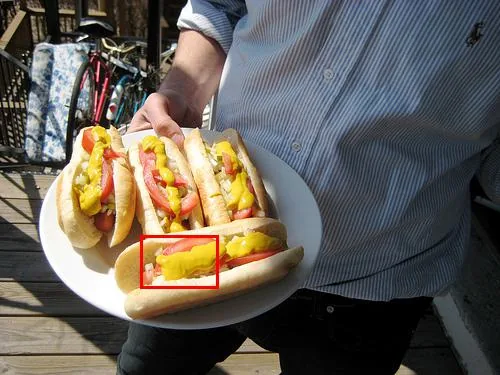
<think>To determine which kind of fast food is on the plate, first look for the plate being held in the image. The plate is white and round, held by a person standing on a wooden deck. On the plate, there are several elongated sandwich-like items with a soft, bun-like exterior. Each item contains a sausage, visible by its cylindrical shape and location within the bun. The fast food items are topped with bright yellow mustard, red ketchup or tomato slices, and some chopped onions, which are classic toppings for this type of food. By focusing on these visual clues—the bun, sausage, and toppings—we can identify the key region to highlight. The red bounding box should be drawn around one of these sandwich-like items on the plate, especially where the bun, sausage, and toppings are clearly visible.</think><image_start>

[generated image: generated-thought-0.webp]

<image_end><think>With the red bounding box highlighting one of the items on the plate, we can clearly see the classic components of a hot dog: a soft white bun split open, a sausage placed inside, and a variety of condiments such as mustard, ketchup, and onions. This arrangement matches the typical presentation of a hot dog, which is a popular fast food item. The other items on the plate share the same structure, confirming that all the food on the plate is a hot dog. Therefore, the answer is hot dog.</think><answer>hot dog</answer>

Visual Search: 00102

Ground truth: door

Input
Released supervised target thought
Exact prompt
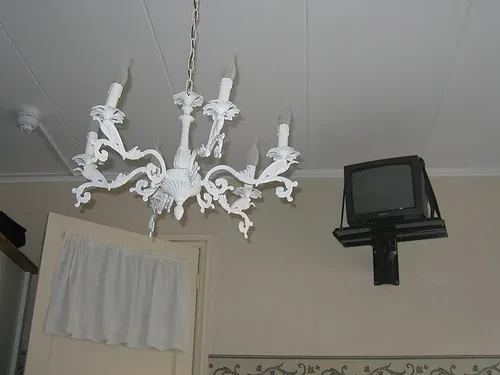
What is the curtain on?

BAGEL-7B-MoT correct

Parsed: door · Runtime: 16.4s · Images: 0

No image emitted naturally.

Complete raw output
<think>
To determine what the curtain is on, I first examine the question_image, which shows a room with a chandelier, a mounted television, and a door with a curtain. The curtain is visible hanging above the door, suggesting it is part of the door's design. The question_text asks specifically about the curtain's placement, so I focus on identifying the object it is attached to.

From the image, the curtain appears to be a simple, lightweight fabric, likely used for privacy or decoration. It is positioned above the door, which is a common placement for such curtains. The door itself is cream-colored, and the curtain is white, matching the room's neutral tones.

For the answer_image, I would expect a closer view of the curtain, emphasizing its material and how it is attached to the door. The image should clearly show the curtain hanging above the door, with the door's frame and any hardware visible. This would confirm the curtain's placement and provide a more detailed perspective.
</think>
The curtain is on the door. 

**Answer image description:**  
The image shows a close-up of the door with a white curtain hanging above it. The curtain is simple and lightweight, attached to the door frame, and matches the room's neutral color scheme. The door itself is cream-colored, and the curtain provides a subtle decorative touch.

ThinkMorph-7B correct

Parsed: door · Runtime: 45.9s · Images: 1

Generated thought
Complete raw output
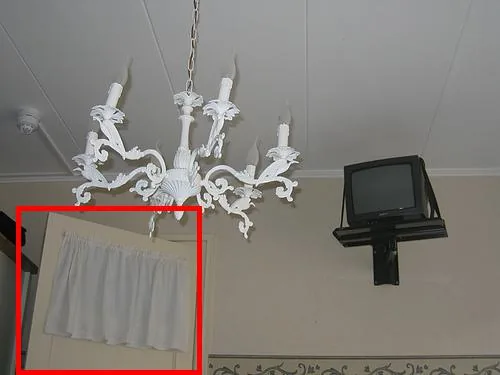
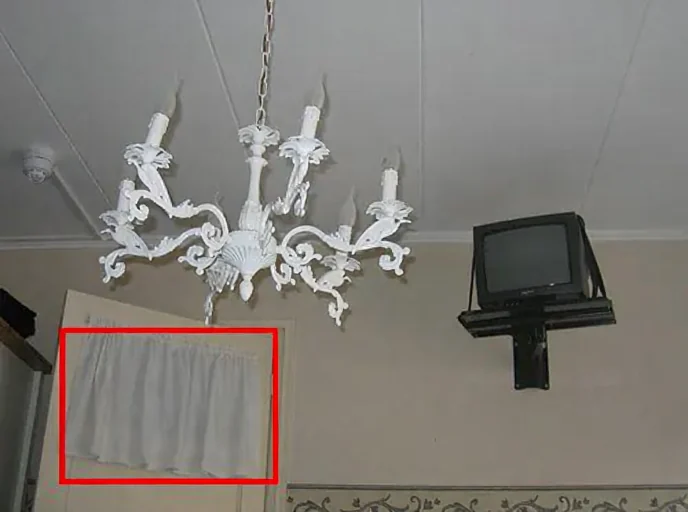
<think>To answer the question, the first step is to locate the curtain in the image. The curtain appears as a small, light-colored piece of fabric hanging horizontally. Next, observe what the curtain is physically attached to or positioned on. In the image, the curtain is mounted above a door, which is indicated by the rectangular shape, frame, and the way the curtain is hung across the top. Focus on the structure directly beneath the curtain, noting its form and orientation. The red bounding box should be placed around the area where the curtain is attached, making sure to highlight the door below the curtain, as this is the surface the curtain is resting on.</think><image_start>

[generated image: generated-thought-0.webp]

<image_end><think>With the red bounding box highlighting the curtain and the structure beneath it, it becomes clear that the curtain is affixed directly above a door. The boxed region shows the curtain hanging across the top of the door, confirming that the door is the support for the curtain. This visual evidence leads to the conclusion that the curtain is on the door.</think><answer>door</answer>